

Designing with Empathy: A Conversation with Paola Contreras of HDR
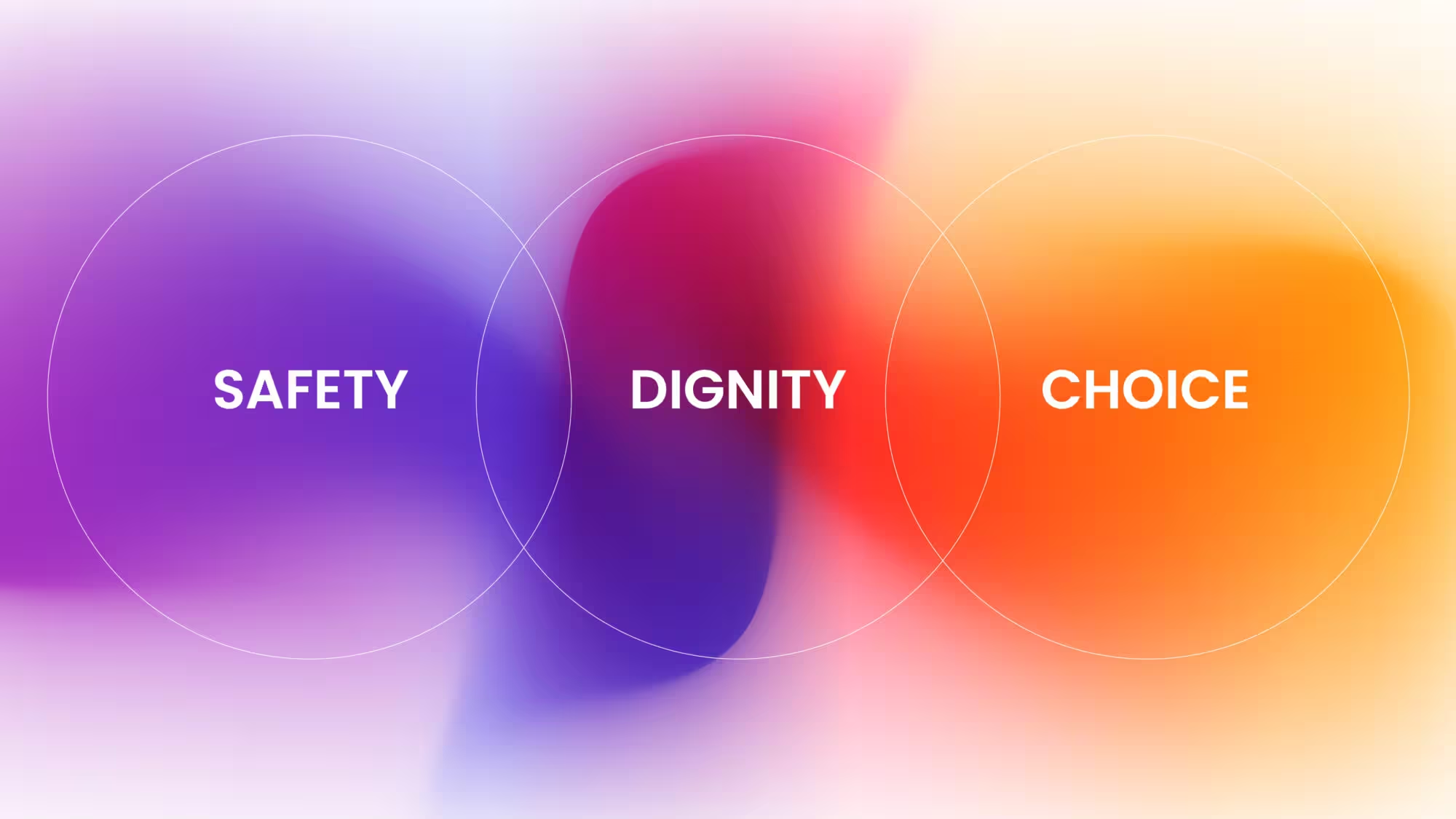
“No matter what environment it is, people still need to feel like they matter.”
April 7, 2026
By Brandy Small
Healthcare, justice, and behavioral health environments are some of the most complex spaces designers work in. Safety requirements, operational protocols, and regulatory constraints shape nearly every decision.
Yet increasingly, designers are asking a different question: How can these spaces feel more human?
I recently spoke with Paola Contreras, Associate & Senior Interior Designer at HDR, whose work focuses on healthcare, justice, and behavioral health projects. For over two decades, Paola has helped lead design strategies for environments where safety, dignity, and human experience must coexist.
During our conversation, we explored how empathy, evidence-based design, and thoughtful furniture choices are reshaping spaces that were once defined by rigid institutional aesthetics.
One idea surfaced repeatedly: design has the power to change how people experience difficult moments.
Designing for Human Experience
When Paola first began working in justice environments, the design approach was very different from what it is today. Early justice facilities, she explained, were defined by purely institutional materials and aesthetics.
“It was sealed concrete floors, painted block walls, and maybe an accent color to differentiate spaces,” she said.
But over time, research began to show that environments have a direct impact on behavior, anxiety, and overall well-being. Facilities slowly began reconsidering how these spaces were designed.
“Clients started to realize that environments shape behavior,” Paola explained. “The right context can reduce anxiety and support better outcomes.”
Today, many facilities are moving away from purely institutional environments toward spaces that feel more supportive and human-centered.
Shared Principles Across Regulated Spaces
Although healthcare, behavioral health, and justice environments serve different populations, Paola sees clear design principles connecting them. At the core are three essential elements: safety, dignity, and choice.
“No matter what environment it is, people still need to feel like they matter,” she said.
One of the most meaningful shifts she has seen is the growing effort to provide occupants with small moments of control. Even something as simple as choosing where to sit can have an impact.
For years, many justice housing units relied on fixed tables where residents ate, played games, and spent most of their time. Designers are now rethinking those spaces to allow more flexible furniture arrangements that provide choice while still maintaining safety.
That same principle applies in healthcare waiting areas. Offering different seating options allows visitors to choose how they engage with the space and helps reduce stress during an already difficult moment.
Designing for Safety Without Losing Humanity
Creating environments that feel welcoming while maintaining strict safety requirements can be one of the most challenging aspects of designing for regulated spaces.
For Paola, that process begins well before finishes or furniture selections. It starts with planning and spatial experience.
“I think about how people will approach and move through the space,” she said. “Clear sight lines and intuitive navigation help reduce anxiety.”
Architectural details also play a role. Rounded corners, intuitive layouts, and thoughtful material selections can soften environments while still meeting safety standards. From there, elements like color, texture, and lighting add layers that help make spaces feel calmer and more supportive.
Evidence-Based Design in Practice
Many of the decisions Paola makes are guided by evidence-based design, an approach that relies on research to inform design strategies.
“We’re constantly learning,” she said.
At HDR, dedicated research teams help designers evaluate how design choices affect operational outcomes, financial performance, and human well-being. For Paola, the most meaningful outcomes are often the human ones.
“There’s nothing better than returning to a completed project and seeing people using the space and realizing that it’s working,” she said.
Those moments, she explained, validate the countless decisions made throughout the design process.
The Power of Furniture in Human Experience
“Furniture is the closest layer to the human experience,” she said.
People may admire the architecture of a building, but they interact directly with furniture. If a chair is uncomfortable or unwelcoming, the experience of the space changes instantly. Conversely, comfortable seating options can provide a sense of calm for someone waiting for a difficult appointment or navigating a stressful moment.
“That experience stays with people,” Paola explained. “We remember how something made us feel.”
Because of this, she believes furniture should be considered much earlier in the design process than it often is today. Too frequently, furniture is treated as an afterthought rather than an integral part of shaping the environment.
Empathy as a Design Philosophy
Toward the end of our conversation, Paola reflected on what ultimately guides her design decisions.
“I think empathy is really what drives my work,” she said.
That mindset has become even more meaningful in projects like pediatric healthcare environments, where seeing a space from a child’s perspective can reveal entirely new design considerations.
Paola described physically lowering herself to a child’s eye level while reviewing a design to better understand what young patients might experience when entering a space. Those moments, she explained, help designers rethink assumptions and make more intentional decisions. Because ultimately, every project is about the people who will experience the space.
About the Interviewee
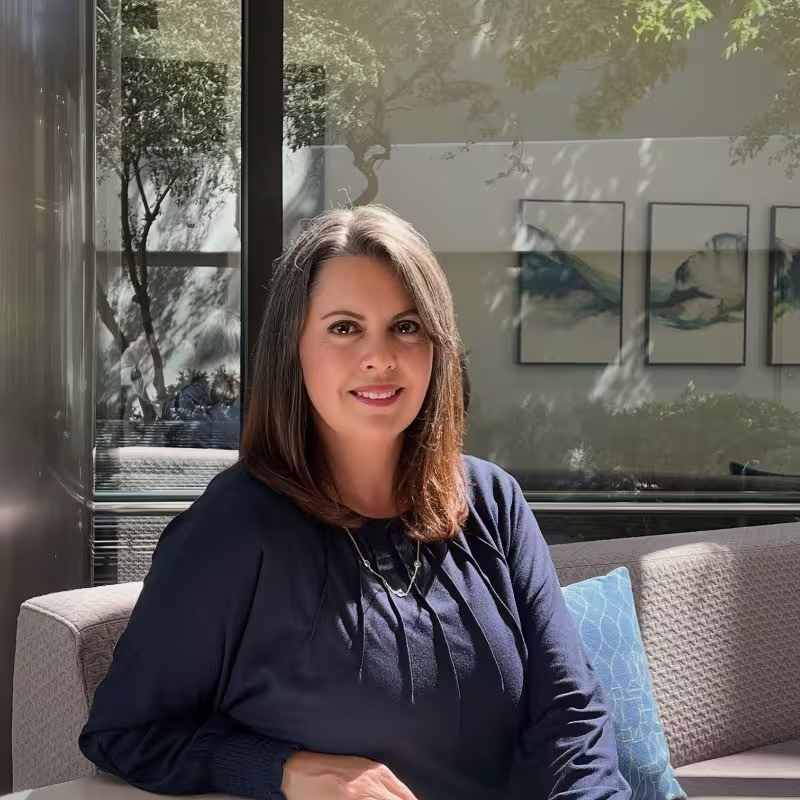
Paola Contreras, CHID, EDAC
Associate & Senior Interior Designer, HDR
Paola Contreras is a Certified Healthcare Interior Designer with more than 20 years of experience designing healthcare, justice, and behavioral health environments. At HDR, she leads projects from concept through construction, integrating evidence-based design principles to create spaces that balance function, safety, dignity, and the human experience.
About the Author
Brandy Small, MA
Independent Content Strategist for Furniture and Interiors Brands
Brandy Small is an independent content strategist focused on the furniture and interiors industry. Through interviews and industry storytelling, she highlights the people, ideas, and projects shaping how furniture and design influence the spaces where we live, work, and heal.