

Healthcare Design Trends to Watch in 2026
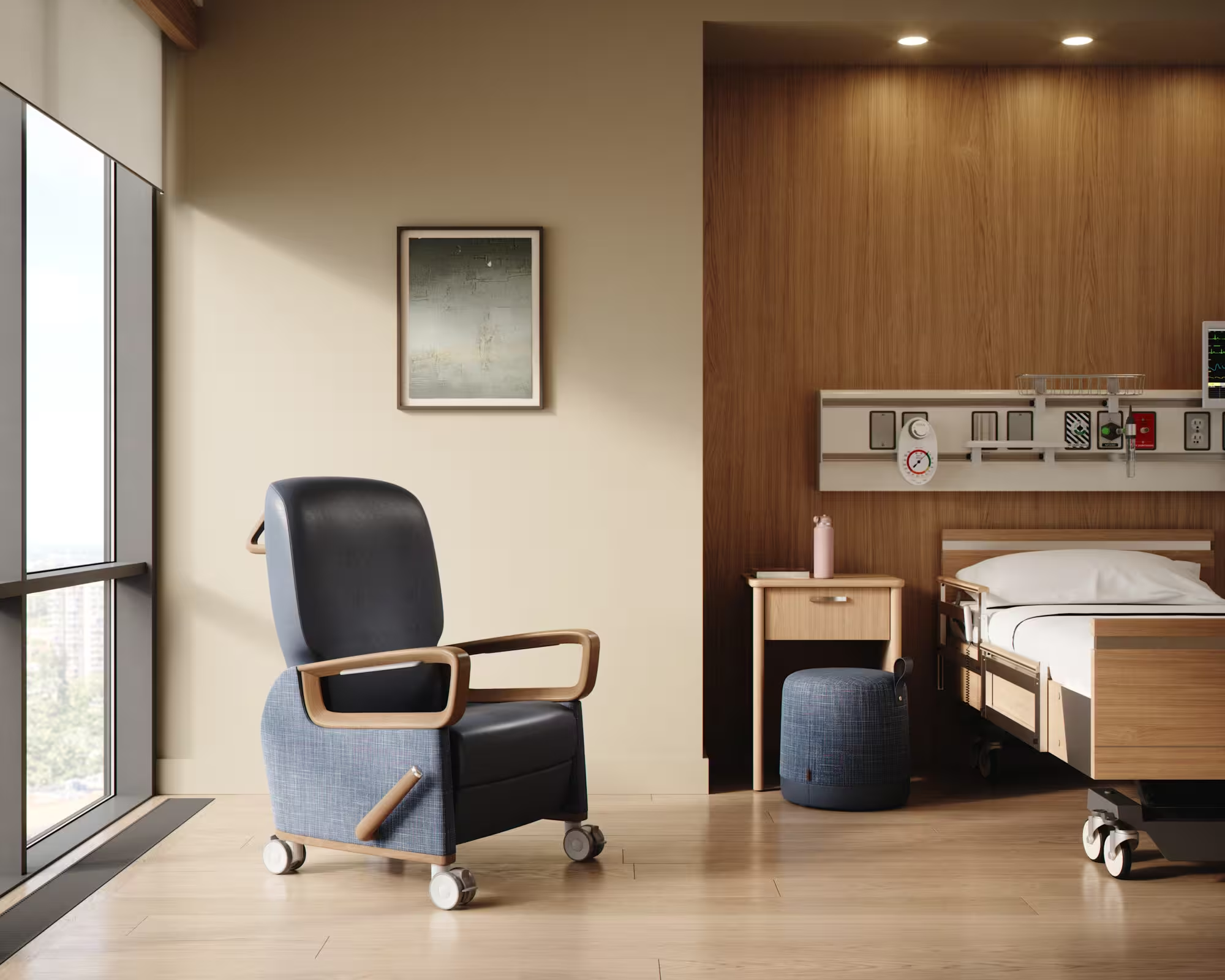
“Health is life… bring life into this space…When you design for the needs of a whole human being, it’s just good design — not healthcare design.”
-Von Robinson
Designer of the Ellie Collection
January 06, 2026
Healthcare Design Trends to Watch in 2026 reflect a continued shift away from strictly institutional environments toward spaces that better support well-being, flexibility, clinical performance, and staff experience. This evolution isn’t about unveiling new ideas — it’s about strengthening strategies that have already proven effective across real projects and care settings.
Across the industry, planning and design teams are prioritizing environments that elevate the experience of patients while supporting the daily realities of staff. The trends below reflect how that emphasis is shaping the built environment, backed by emerging research and practitioner insight.
Environments Designed for Well-Being and Healing
A new warmth in clinical spaces
Cold, clinical aesthetics have been fading for several years, replaced by environments that feel more welcoming and hospitality-influenced. Growing evidence links sensory comfort — including lighting quality, acoustic control, and warmer color palettes — to lower cognitive fatigue, improved mood regulation, and enhanced overall wellbeing for patients and care teams. These elements are now becoming core design considerations rather than optional enhancements.
Biophilic design as a design standard
Biophilic design continues to be reinforced by research. A 2024 review published in Frontiers in Built Environment found strong associations between natural elements and reduced stress, improved rest, and greater emotional well-being. Access to daylight, outdoor views, nature-inspired materials, and restorative visual connections is increasingly treated as a foundational planning principle.
As one architect noted in a recent industry interview:
“Even a few minutes of restorative exposure to nature can influence emotional regulation and decision-making.”
More control in the hands of patients
Smart-room technology is expanding quickly as systems focus on improving patient autonomy. Environmental controls — lighting, temperature, entertainment, and window treatments — help reduce helplessness and support a more dignified care experience. Personal storage and intuitive control interfaces are becoming expected features that support patient comfort throughout their stay.
Quiet as a clinical priority
Noise management is increasingly treated as a clinical requirement rather than a finishing detail. Research links lower noise levels to better sleep quality, reduced anxiety, and fewer avoidable errors among care teams. As a result, acoustic zoning, improved door seals, and sound-absorbing materials are being incorporated early in the planning process to create calmer, more restorative environments.
Flexibility, Adaptability, and Smarter Use of Space
Modular thinking everywhere
Modular construction and adaptable layouts continue to expand across healthcare projects. Prefabricated walls, movable partitions, and acuity-convertible rooms give facilities the ability to shift quickly in response to changing care needs, patient surges, or new clinical models.
As one designer described it:
“We’re creating rooms that can become something else without disruption.”
Footprint efficiency as a performance metric
Space efficiency is now being tied directly to operational performance. Health systems are increasingly focused on increasing usable exam or treatment spaces within existing footprints through strategies like sliding doors, compact staff support zones, and multi-use rooms that adapt across the day. These adjustments help improve throughput and reduce wait times.
Onstage/Offstage becomes mainstream
The onstage/offstage planning model is now widely adopted because it consistently improves patient privacy and creates calmer, more intuitive environments. Separating operational movement from public zones reduces visible clutter, streamlines staff flow, and supports a more positive perception of care.
Decentralized workstations
Workflow research shows that decentralized nurse stations reduce staff travel distance, shorten response times, and improve patient visibility. Smaller, distributed work points located near patient rooms are increasingly replacing the single, central station model to support more efficient and responsive care delivery.
Technology Integration and Future-Proofing
Infrastructure built for AI and robotics
Health systems continue to invest in infrastructure that supports emerging automation technologies. Larger, better-cooled IT rooms, expanded data pathways, dedicated service corridors for robotics, and sensor-driven distribution routes are becoming standard considerations. This ensures facilities can scale into next-generation technologies without disruptive retrofits.
Smart buildings that react in real time
AI-driven building management systems are moving from pilot concepts to foundational tools. These systems dynamically adjust HVAC, lighting, airflow, and energy loads in real time, supporting more consistent indoor environmental quality and improved operational efficiency.
Resilience and sustainability take center stage
Sustainability is increasingly understood as part of continuity-of-care planning. Durable materials, climate-adaptive design, energy systems like solar or geothermal, and long-term water strategies help ensure that healthcare environments remain operational during extreme conditions. Resilient infrastructure is no longer viewed as an environmental benefit — it’s a clinical one.
Furniture’s Role in These Trends
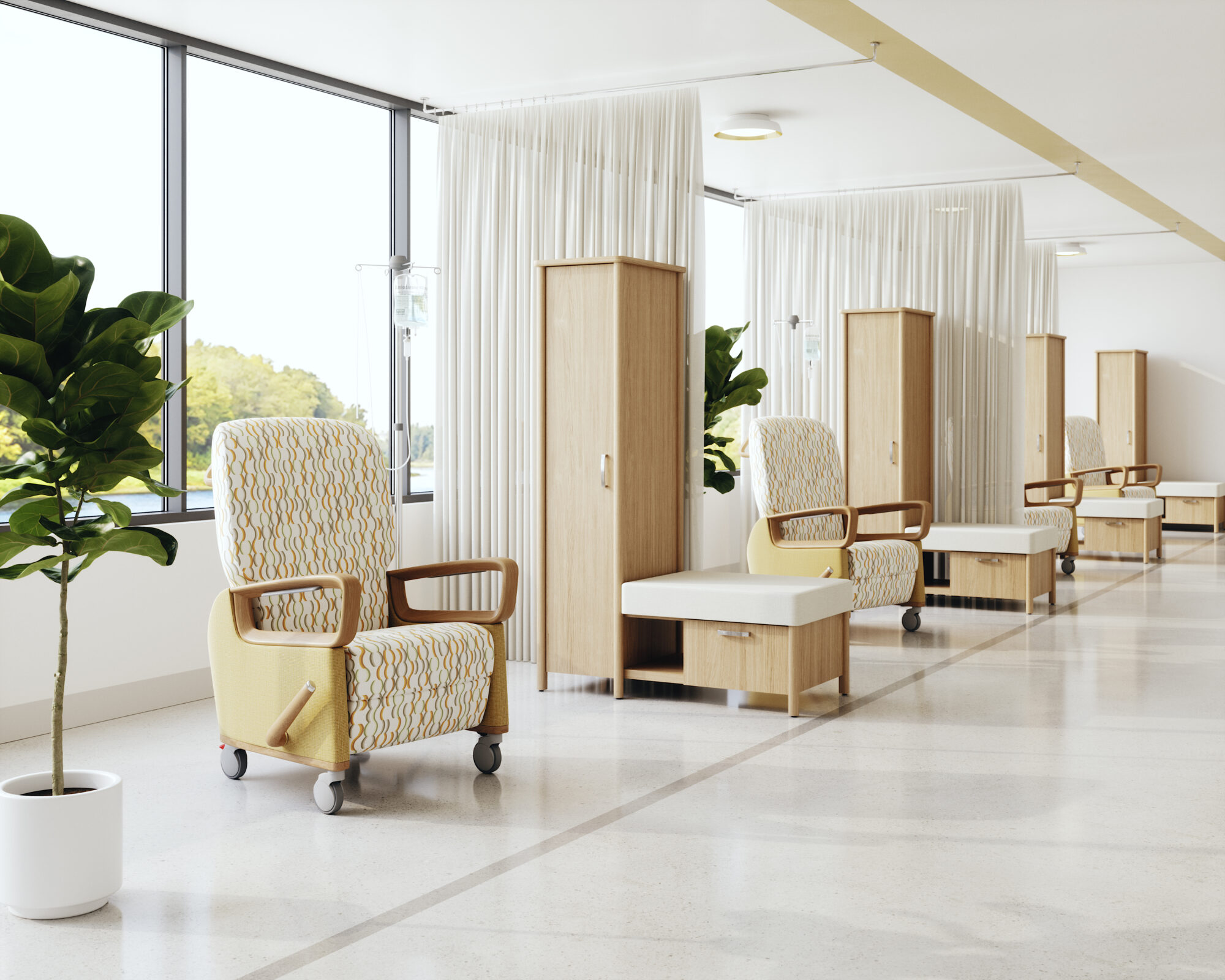
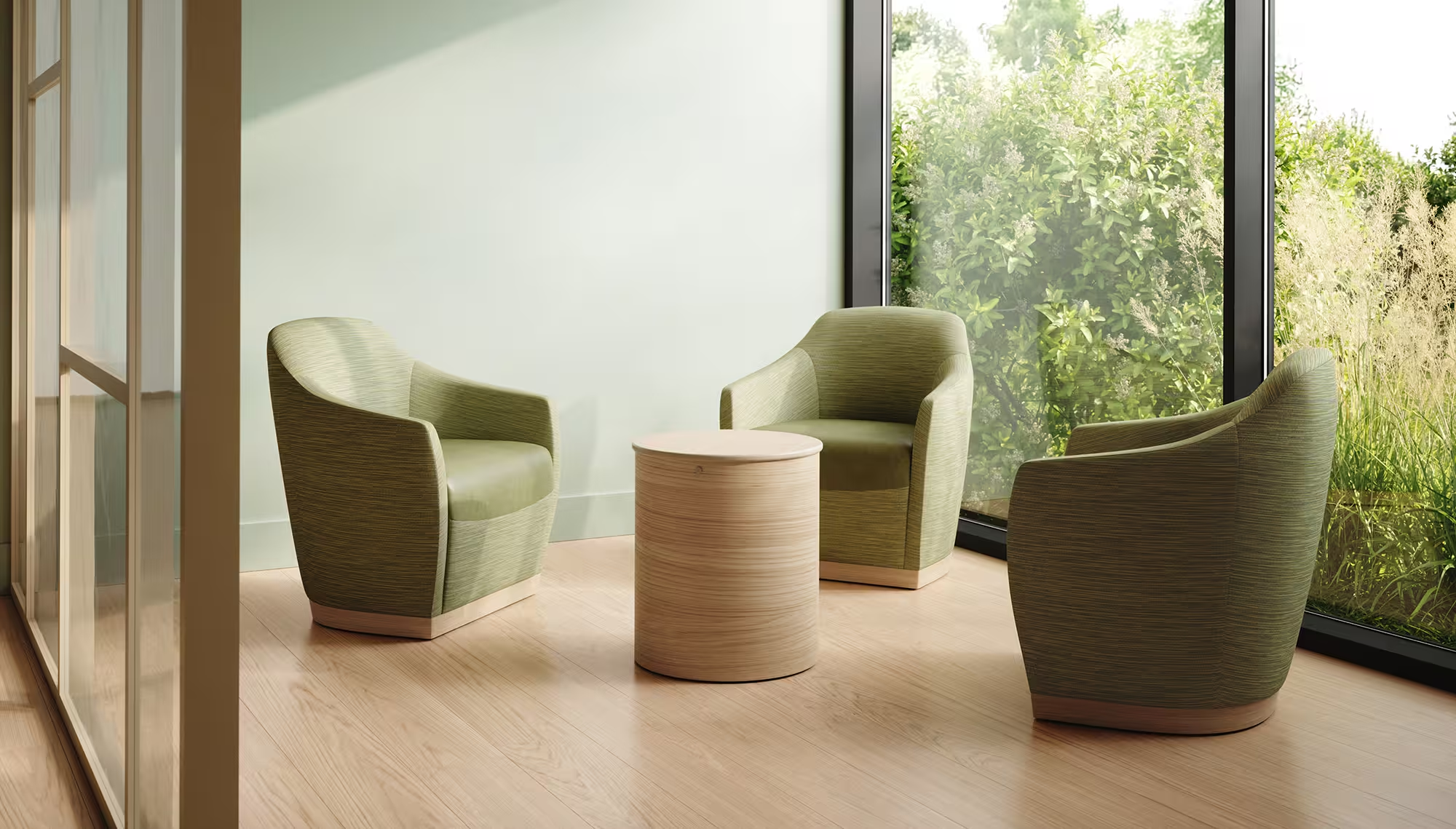
As designers rethink the sensory and emotional experience of care, furniture has become a key part of the environmental equation. Materials, ergonomics, and construction methods influence everything from perceived comfort to cleanability to how spaces respond to daily wear. The choices made at the furniture level often determine whether environments maintain their intended warmth and functionality over time.
What This Means for 2026 and Beyond
Designers working in healthcare have always understood that the environment shapes how care is experienced. What we’re seeing heading into 2026 is a clearer expression of that idea — and far more consistency in how it influences planning, materials, technology, and day-to-day operations. Von Robinson, designer of the Ellie Collection, captures this in two simple thoughts:
“Health is life… bring life into this space.”
“When you design for the needs of a whole human being, it’s just good design — not healthcare design.”
And that is the real takeaway from these trends:
The built environment isn’t just the backdrop to care. It is one of the tools that makes better outcomes possible.

About the Author
Tavie Verhagen serves as the Vice President of Architecture and Design at Kwalu. She partners with healthcare leaders and designers to develop innovative, future-ready solutions. With seven years of experience in healthcare architecture and design, Tavie brings a thoughtful and holistic approach to her work. She is passionate about creating spaces that support patient well-being and promote operational excellence.